


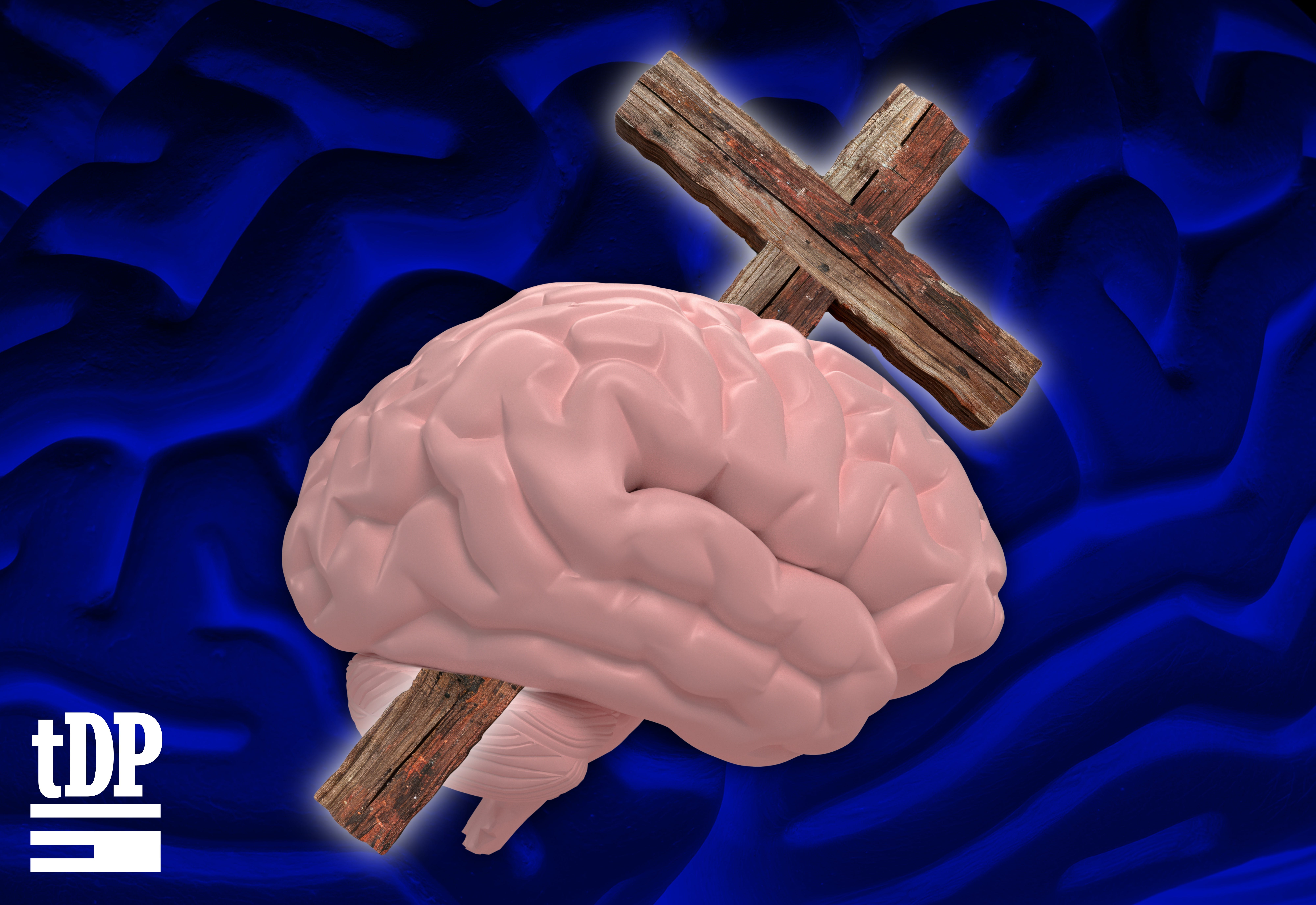
Can I use Occam’s Razor, allegory, and psychological theory to determine whether religion helps or hobbles a mind’s ability to critically think and problem-solve? I think that society, like William of Ockham, a 14th century priest and philosopher, significantly underestimates the psychological and cognitive cost of choosing faith instead of a life of material measurement and problem-solving. What is the cost of assuming and hoping from childhood through adulthood, instead of measuring, confirming, and taking responsibility within reality?
The allegory: Imagine you are about to engage in a footrace competition that will last your entire life. And for this endurance race you are given a religious sack and expected to stand and stay within it throughout. You are taught to feel shame, so you stay within that sack. You expect, as promised, that there will be some reward for having competed, with your life, while hobbled by your cognitive sack. But as you start the race for your life, you notice that there are other competitors not wearing sacks. Some are even using logical equipment for a footrace, such as shoes and carrying water. Due to the hobbling teachings you are familiar with, you have never witnessed or contemplated anyone wearing shoes or even considered the possibility that people did not actually have to hop around in sacks for their entire lives. Now in that moment, and potentially for the rest of their life, the competitor who has been hobbled by a religious sack has to come to terms with repeated cognitive loses against others without sacks. Mysteriously as they perceive.
If the sacked competitor throws a tantrum or threatens the judges to let them start first or else, do I look to see if they meet diagnostic criteria for Oppositional Defiant Disorder or Antisocial Personality Disorder? If they turn to drinking alcohol heavily, loose motivation, refuse to do previously fun activities, or start to have suicidal idealiations after losing repeatedly at competitions in reality, do I look for diagnostic criteria for alcoholism or Depression respectively? If they fall into a self-righteous rage at the perceived unfairness to them and their religious sack, and in an emotional and physical outburst of entitlement proceed to hit or shoot the winning competitor, do I consider diagnostic criteria for Intermittent Explosive Disorder, Antisocial Personality Disorder, or megalomania?
Or… if I apply Occam’s Razor, do I have an explanation and cause for all of the potential manifest aberrant and dysfunctional behaviors, perceptions, conclusions, and reactions above as below? Has the human in the sack been cognitively hobbled by their religion? Are the problem-solving and faith based skills they learned within the sack, the primary source and cause for the aberrant behaviors? Has the socialized religious sack hobbled what they are able to perceive, limited their experiential knowledge, reduced their ability and options to problem solve, stunted their emotional awareness and maturity to react appropriately to adversity or reality, and resulted in dysfunctional behaviors that may or may not meet the criteria for a psychological diagnosis?
To use a second allegory, I think religious belief is like tying a dog’s front right foot up to their chest and throwing a ball. We as a society have become so used to watching everyone fall and tumble over ourselves and each other, that we have created labels and diagnoses within this unnatural religious socialized state of being cognitively hobbled by religion. We think that it is normal and relative for the three legged dog to trip a couple times on the way to fetch the ball and that a dog is high functioning and successful if it has learned how to hop on the front left foot. But we are in an ironic and corrupted state when we label the frustrated reactions some dog’s (or humans) may have to being hobbled as being the problem, such as biting their leg, barking at the owner, or laying down and giving up. Instead of what caused the behaviors in the first place being the actual problem. The Occam’s Razor, with the easiest solution appears to be to unhobble the dog’s leg or to not hobble the mind by teaching religion and faith.
Maybe Occam’s choice now, with hundreds of years of science since, would be a balanced mind and life is more valuable than faith in a restrictive religious sack.
